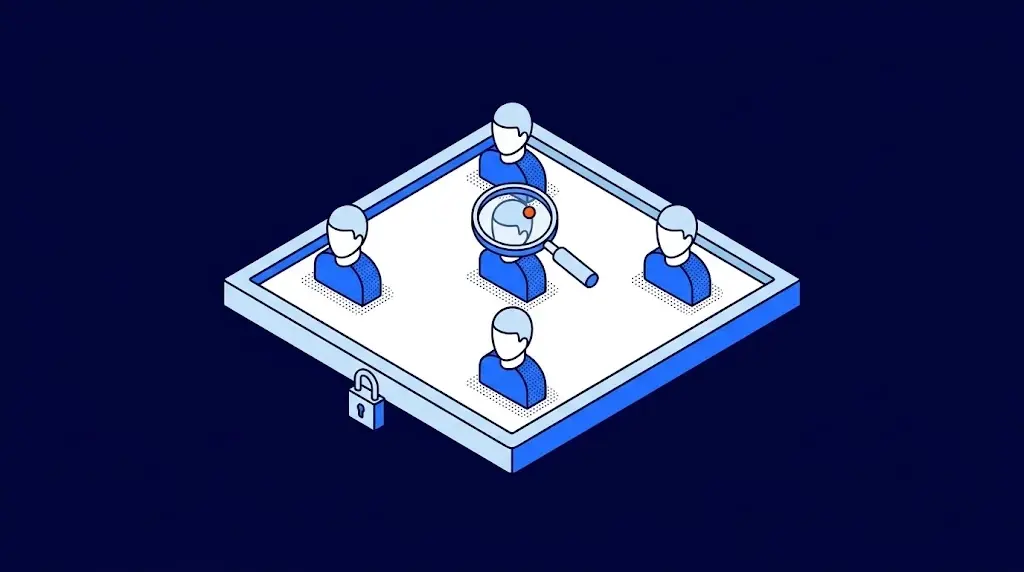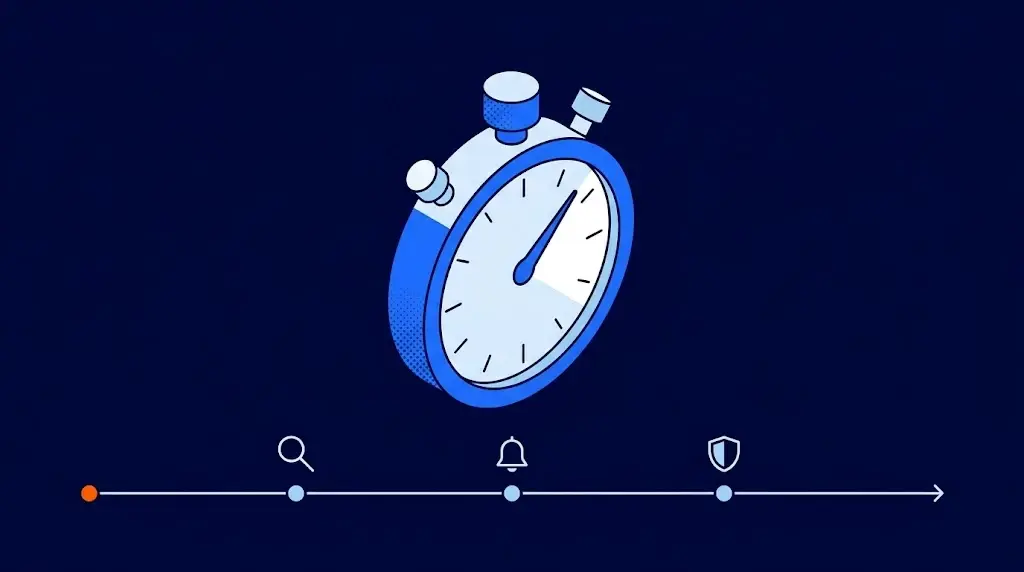
A SOC (Security Operations Center) is the team of analysts, processes and tools that watches activity across a company's systems around the clock, spots suspicious behavior, investigates every alert and contains incidents before they turn into a business problem. A SOC as a service (SOCaaS) is that same team, run by an outside provider and contracted by subscription, so you don't have to build your own infrastructure or hire analysts.
Before you decide whether your company needs one, it helps to be clear on what a SOC actually does, how it works on the inside, what changes when you hire it as a service, what it costs and which signs tell you it's time to have one.
What is a SOC in cybersecurity?
SOC stands for Security Operations Center. When people talk about a cybersecurity SOC, this is what they mean. Its job fits in one sentence: know at all times what is happening on your company's computers, servers, email accounts and cloud services, and raise the alarm or step in when something falls outside the norm.
A SOC is an operation that runs all year; you can't install it and walk away the way you would with a program. The easiest way to picture it is the security desk in a corporate building. It has three parts. People: security analysts working in shifts, like the guards at the desk. Processes: the manual that says what to do with each type of alert, so a response at 3 a.m. looks exactly like one at 11 a.m. And technology: the sensors installed on your devices, which are the cameras, and the screen where all that information comes together, which is the monitor at the desk.
A simple example. A sales rep signs in to their email at midnight from another country, and ten minutes later the same account tries to download the full customer list. Each event on its own looks normal. Seen together, they signal that someone else has the password. That is what a SOC sees, and what a company without one finds out weeks later.
One common mix-up is worth clearing up: SOC 2 is an audit report that attests to a service provider's controls. It has nothing to do with a security operations center. When a company says "we have SOC 2," it's talking about an audit report; when it says "we have a SOC," it's talking about monitoring.
What does a SOC do? The five functions
Every SOC, in-house or outsourced, does the same five things. What separates a good service from an average one is how thoroughly it handles each of them.
- It watches all the time. It receives what happens on every computer, server, account and cloud service, day and night. A good share of attacks unfold over weekends or in the early hours, exactly when nobody at the office is in front of a screen.
- It separates what matters from the noise. A midsize company generates thousands of alerts a day, and almost all of them are false alarms: an update, a sign-in from someone's home, a file moved to another folder. The SOC sets aside what is normal and keeps what deserves a closer look.
- It investigates what happened. Which account was used to get in, from which device, at what time and what else was touched. Without this step, an alert is just a suspicion; with it, the alert becomes a case with a name, a time and a scope.
- It contains the problem. It disconnects the affected computer from the network, locks the compromised account or cuts off communication with the site the attack is being controlled from, and tells your IT team what to do next.
- It puts everything in writing. It logs every case and every action. That record is what leadership reads in its morning summary, and what an auditor, an enterprise customer or an insurer asks for when you need to prove your company is being monitored.
How does a SOC work? People, processes and technology
Back to the security desk. The monitor that shows every camera at once is called a SIEM (Security Information and Event Management). It's the platform that receives the logs from all your systems, correlates them and raises an alert when a sequence matches the way an attack behaves. If you're evaluating that piece, we have a guide to the best SIEM solutions for businesses.
The cameras are the sensors. The most important one is called EDR (Endpoint Detection and Response), a small program installed on every computer and server that watches what each application does and can isolate the device if it spots something odd. Add to that the email filter, the vulnerability scanner and the lists of sites and addresses already known to be malicious.
None of those tools is a SOC by itself. A camera with nobody watching only records. Without analysts reviewing the alerts and making decisions, the consoles pile up alerts nobody reads.
The guards are the analysts, and they work in tiers. Tier 1 reviews each alert and decides whether it's real. Tier 2 investigates confirmed cases and contains them. Tier 3 hunts for what the rules missed and improves the rules for next time. The procedures manual, known in this field as a playbook, is what ensures an incident gets the same treatment no matter who is on shift.
Today, part of the Tier 1 and Tier 2 work is done by artificial intelligence (AI) agents: they review each alert in seconds, gather the context and hand the analyst a case that has already been investigated, ready for a decision. We explain how this works in our article on what an agentic SOC is.
What is SOC as a service (SOCaaS)?
SOC as a service is the entire security desk, contracted from a company that already has it up and running. You install a small agent on your devices; the provider brings the platform, analysts for every shift and the procedures. What you get are cases that have already been investigated, clear instructions on what to do and reports ready for leadership, instead of one more console someone on your team has to watch.
You'll run into several names for similar things, and it pays to tell them apart before comparing proposals. Managed SOC means the same as SOC as a service. An MSSP (managed security service provider) is a security provider in the broad sense: it may run your firewall or antivirus without any SOC behind it. MDR (managed detection and response) is a service focused on detecting and responding to threats on computers and servers; a SOC as a service usually also covers email, accounts, network and cloud, and adds the reports auditors ask for.
At a minimum, a complete SOC service should include:
- The platform where all the information comes together, run by the provider, with no separate licenses.
- The protection agent on every computer, server and mobile device.
- 24/7 monitoring and investigation of alerts, every day of the year.
- Containment instructions: what to disconnect, what to block and in what order.
- Reports for leadership and for IT on an agreed schedule.
- On higher-tier plans, vulnerability scanning and patching.
In-house SOC vs SOC as a service: comparison
Choosing between building your own security desk and hiring one comes down to six points. The table assumes a midsize company that doesn't yet have a security team separate from IT.
| Criteria | In-house SOC | SOC as a service |
|---|---|---|
| Upfront investment | Licenses, servers, recruiting and training before you detect your first incident. | None. You pay a monthly fee per protected device. |
| Time to get started | Months, between design, purchasing, hiring and fine-tuning. | Days. The agent goes on your devices and the service starts seeing data. |
| Staff | Covering three shifts, weekends and vacations takes a team of several analysts and a team lead. | Included. The provider covers shifts, absences and turnover. |
| 24/7 coverage | Only with a large team; in practice it usually ends up as business hours plus on-call phone duty. | It's the foundation of the service. |
| Audit evidence | Depends on someone documenting every case on time. | A contract deliverable: a case log and periodic reports. |
| Growth | Every new branch or cloud service requires more staff and licenses. | You add devices to the plan. |
An in-house SOC makes sense for organizations with hundreds of servers, very strict rules about where their data can live, or a security team that already exists. For most midsize companies, the outsourced security desk gets started sooner and costs less. We go deeper into each scenario in In-house SOC vs SOCaaS: which is the better option for your company.
When should you hire a SOC as a service?
There are five situations in which a SOC stops being a nice-to-have and becomes the decision that shapes everything else. If two or more sound familiar, you're already there.
- Your IT team handles security alerts on top of user support, server administration and project work. A SOC gives them that time back and hands them only the cases that matter, already investigated.
- A customer, an insurer or an auditor has asked you for evidence of monitoring. Enterprise contracts, cyber insurance policies and standards like ISO 27001 or PCI DSS (the payment card industry standard) call for proof of continuous monitoring, with logs and dates, and that evidence is a natural SOC deliverable.
- You have more than 20 devices and part of your operation runs in the cloud or on Microsoft 365. Beyond that size, the activity no longer fits on one screen or within one person's attention.
- You want the time between someone getting in and someone noticing to be measured in minutes. At many companies today, that time is measured in weeks. It only comes down with continuous monitoring and someone reviewing every alert as it arrives.
- You looked into building your own SOC and the staffing budget didn't add up. This is the most common case. The technology fits in the budget; the team of analysts needed for 24/7 coverage doesn't.
If that sounds like your situation, take a look at how our SOC as a Service for businesses is put together and what each plan covers.
How much does SOC as a service cost?
The most common model on the market is a monthly fee per protected device, whether it's a computer, a server or a phone, with plans that go up in price as they cover more: visibility only, active protection, response across more fronts, or the evidence auditors ask for. Minimum commitments typically start somewhere between 20 and 50 devices.
As a public reference, the TecnetSOC plans listed on our service page range from a free visibility plan for up to 10 devices to paid plans priced per device per month according to the level of coverage, with minimums of 20, 30 and 50 devices. The two mid-tier plans can be tried for 30 days on your own devices, with no credit card required.
To compare it with building your own, add up the salaries of analysts for every shift, the tool licenses, the servers they would run on and the training every year. The payroll alone for a team that covers 24/7 usually exceeds what the service costs for several hundred devices.
What to ask a provider before you sign
On paper, SOC proposals look a lot alike. These five questions separate a service that takes action from one that only sends you notifications:
- If a serious incident happens at 3 a.m., who handles it and how quickly? Get that commitment in writing.
- What do they monitor: only computers, or also email, accounts, network and cloud?
- When they detect something, do they contain it or just send an email? Who disconnects the device?
- What evidence do they deliver, how often, and in what format will an auditor receive it?
- If I end the contract, do I get my logs back, and how soon?
We cover each point, uncomfortable questions included, in how to hire a SOC as a Service and what to consider.
TecnetSOC Agentic: Mexico's first agentic SOC
At TecnetOne we offer TecnetSOC Agentic, Mexico's first agentic SOC. What sets it apart from a traditional SOC is who does the first pass: AI agents review every alert the moment it appears, set aside what isn't a risk, build the context of the case (who got in, from where and what they touched) and hand it to our analysts already investigated. Low-risk actions run instantly; critical ones are decided together with your IT team, and every step is logged for your auditor.
Here's what an ordinary night looks like. At 3:12 a.m., a computer in the accounting department starts encrypting the files in a shared folder. The agent installed on that device disconnects it from the network at that very moment, before it reaches another folder. The case lands with our on-shift analyst with the email the attack came in through and the account it used already identified; the analyst confirms it and leaves your IT team instructions for when they get to the office. At 8:00 a.m., the daily executive summary lays it all out with time, scope and evidence.
TecnetSOC Agentic runs with its own analysts in Latin America, sends you that executive summary every morning and is up and running 24 to 48 hours after you sign up, with agents for Windows, macOS, Linux and your cloud services. Inside the platform, Neo, your AI on-call analyst, explains in plain language what you're looking at and builds the leadership summary in one click.

Frequently asked questions about SOC as a service

Zoilijee is Founder and KAM of TecnetOne, she specializes in business development for Cloud, Hybrid and Enterprise Cyber Resilience environments, her main vision is to empower and protect organizations on new emerging threats in IT.