An ISMS (information security management system) is the set of policies, processes, owners and controls a company uses to protect the confidentiality, integrity and availability of its information in an organized, ongoing way. Instead of isolated actions, it defines what is protected, who is accountable for each part, how risks are assessed and how the company checks that its measures work. The ISO/IEC 27001 standard sets out the requirements for designing and certifying it.
What sets it apart from simply having "good security practices" is evidence. An ISMS keeps a record of every decision, so the company can show a customer, an auditor or an insurer that its security doesn't depend on one person's memory.
What is an ISMS
If your company has already gone through a quality certification, you know the logic: making a good product is only the start, because you also have to document how it's made, measure it, review it and correct it, year after year. A quality management system does that for products. An ISMS does exactly the same for information: it treats it as a process that is planned, operated, measured and improved.
That's why an information security management system isn't a piece of software or a document. It's the way the company organizes its security, and technology is only one part of it, alongside people and processes. A company with the best firewall on the market but no owners, no risk assessment and no periodic reviews has tools, not an ISMS.
What an ISMS includes
These are the components ISO 27001 requires and the evidence each one leaves behind:
| Component | What it is | Evidence it leaves |
|---|---|---|
| Scope | Which areas, systems and locations the system covers. | Scope document. |
| Security policy | Management's commitment and the general rules. | Approved and communicated policy. |
| Risk assessment | What could affect the information and how serious it would be. | Risk register with its treatment. |
| Controls | The measures used to treat each risk. The 2022 version of ISO 27001 lists 93, grouped as organizational, people, physical and technological. | Procedures, configurations and records. |
| Statement of Applicability | Which controls the company applies and why it excludes the rest. | Statement of Applicability document. |
| Metrics | How the company measures that the system works. | Metrics dashboard. |
| Internal audit | An independent review of the system itself. | Audit report. |
| Management review | Leadership reviews the results and decides on changes. | Review minutes. |
Risk assessment is at the center of everything: it determines which controls are chosen and the order in which they're implemented. We explain how to do it step by step in our guide to cybersecurity risk management.
Metrics, on the other hand, tend to be the weakest component. A system that isn't measured ends up as a filing cabinet of documents, so it pays to define a handful of indicators from the start, such as incidents handled, risks treated and audit findings closed.
ISMS roles and responsibilities
An ISMS works when everyone knows what their part is. These are the roles ISO 27001 expects to see, although in a mid-sized company one person can cover more than one:
| Role | What it does |
|---|---|
| Senior management | Approves the policy, allocates budget, accepts the risks that aren't treated and reviews the results. |
| ISMS manager | Coordinates the system, maintains the documentation and reports to management. In large companies this is the CISO (chief information security officer). |
| Information owners | The heads of each department: they decide who can access their department's information and are accountable for its risks. |
| IT team | Implements and operates the technical controls. |
| Employees | Follow the policies and report any incident. |
| Internal auditor | Reviews the system independently and can't audit their own work. |
The most misunderstood role is the information owner. Security is a shared job that reaches well beyond IT: the finance manager is the one who knows which people should see payroll, and IT is the one who configures it. That split between the person who decides and the person who carries it out is the foundation of access controls.
If the company processes personal data, it's worth adding someone who answers for its protection to the individuals concerned and to the authorities. This can be the ISMS manager if they have the training and the time.
How to implement an ISMS
An ISMS follows the continual improvement cycle used by every management standard: plan, do, check, act. This is how the first cycle breaks down in a mid-sized company:
| Phase | When | What happens |
|---|---|---|
| Plan | Months 1 and 2 | Define the scope, run an initial assessment, evaluate risks and approve the policy. |
| Do | Months 3 to 6 | Implement the chosen controls, write the procedures and train employees. |
| Check | Months 7 and 8 | Measure the metrics and carry out the first internal audit. |
| Act | From month 8, on an ongoing basis | Management review, correction of findings and adjustment of whatever didn't work. |
The initial assessment saves months. A distribution company with 150 employees, for example, discovers at that stage that it already meets a good share of the technical controls, but that almost nothing is documented or has an owner. The project stops being about "buying tools" and becomes about organizing what it already has. A cybersecurity assessment is the fastest way to get that starting point.
Timelines vary with size and scope. What doesn't vary is the most common mistake: treating the ISMS as a project that ends. The cycle repeats every year, and that's where its value lies.
The information security policy
It's the document that opens the ISMS and the first one any auditor asks for. The general policy is short, two or three pages; the detail lives in topic-specific policies. This list covers what it should include:
- ☐ Purpose and scope: what it protects and who it applies to.
- ☐ Management commitment, with its signature.
- ☐ Owners of the system and of each department.
- ☐ Information classification: public, internal, confidential.
- ☐ Access and password rules, developed in their own policy. We explain what to require in our password policy guide.
- ☐ Acceptable use of devices, email and internet.
- ☐ Backups and business continuity.
- ☐ Incident management: how incidents are reported and who responds.
- ☐ Legal compliance, including personal data protection.
- ☐ Consequences for noncompliance and a review date, at least once a year.
ISMS, ISO 27001 and certification
The three terms are often used as if they meant the same thing, but each one refers to something different. The ISMS is the system: the way your company manages its security. ISO 27001 is the standard that says which requirements that system must meet; the current version is from 2022, and certificates under the 2013 version stopped being valid in October 2025. Certification is the external audit that confirms your ISMS meets the standard.
You can have an ISMS without certifying it, and many companies start that way: first they get their security in order, and then they decide whether a certificate would open doors with customers. What you can't do is get certified without a working ISMS. We cover what the certification process involves in our ISO 27001 certification guide.

Frequently asked questions about ISMS
It stands for information security management system. It's the term used by the ISO 27001 standard for the set of policies, processes, owners and controls a company uses to manage its information security.
It needs the logic, even if it skips the full formality. A small company can start with a narrow scope, a short policy, a simple risk register and one owner, and grow from there as its customers ask for more evidence.
No law requires one of every company. In practice, regulators in certain sectors, such as financial services, ask for it, and so do more and more corporate customers in their vendor assessments. Data protection laws such as GDPR or US state privacy laws also call for security measures that an ISMS helps demonstrate.
ISO 27001 defines the requirements for the ISMS and is the standard you certify against. ISO 27002 is a guide that explains how to apply each of the controls; it isn't certifiable, but it helps you implement them well.
With three habits: measure the metrics every month, run an internal audit once a year and have management review the results and decide on changes. Without those three, the documentation ages and the system stops reflecting reality.
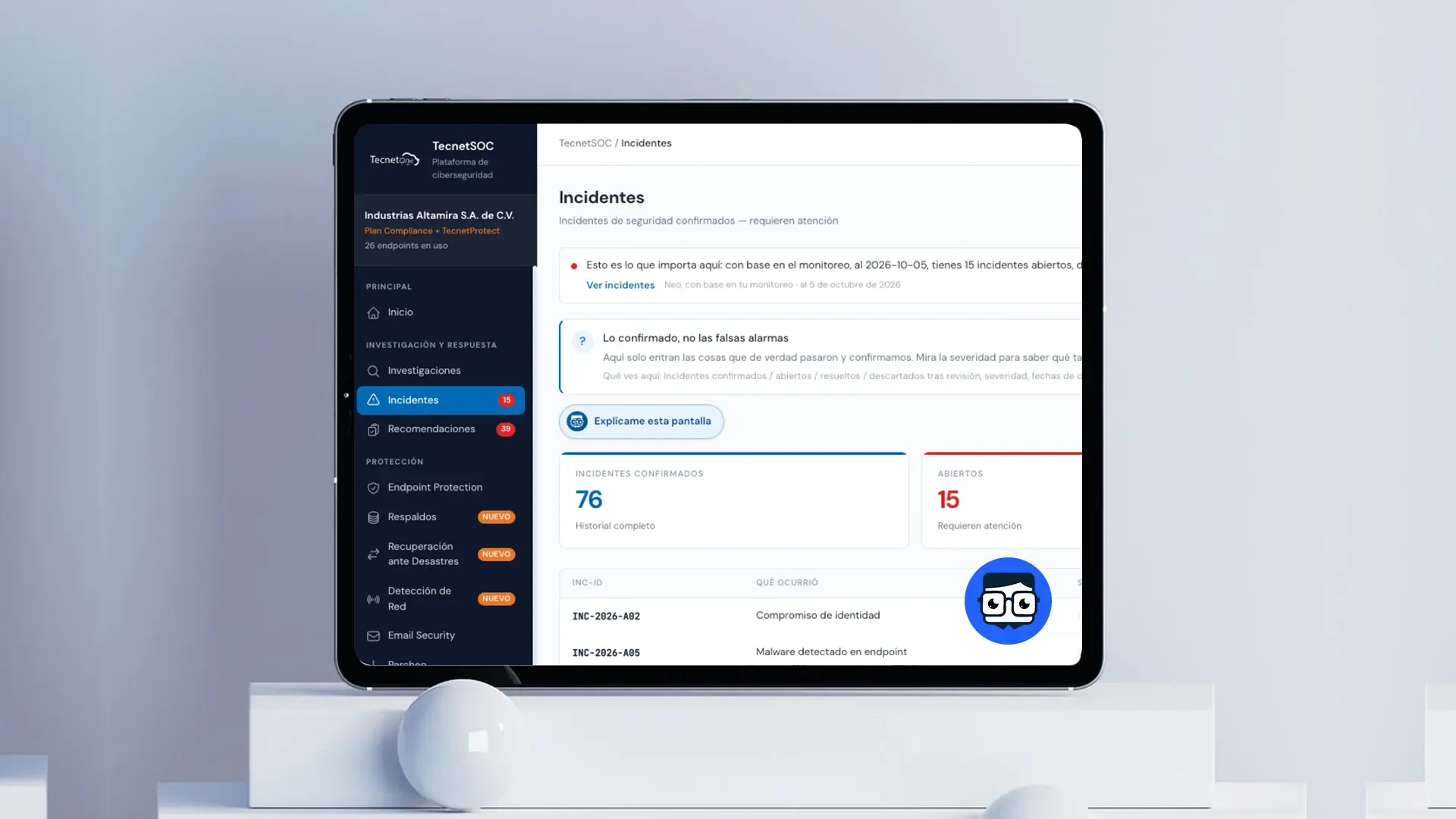
At first, a spreadsheet for the risk register and a well-organized folder for evidence are enough. As controls and audits grow, it makes sense to use a platform that links each control to its evidence, like the one included in TecnetSOC, our SOC as a service.

Microsoft Cloud and Cybersecurity expert with more than a decade of experience in the technology industry. He is recognized for his extensive knowledge in implementing cloud-based solutions and protecting data and systems against cyber threats. As a leader and speaker, Gustavo continues to share his knowledge and best practices at technology events and training programs.